
How Ethics Impact an OSINT Investigation
We’ve heard gasps from potential clients in our presentations — the amount of data currently available about regular citizens is incredible. With their next thought, the entire group picks up their phones to start deleting apps and data.
“I mean, if that makes you feel better, go for it. But digital signatures are created and updated all the time, regardless.”
The best protection an insurance or legal firm has against data misuse lies in the ethics of the #osint investigators on the case. While we would all like to believe we hold the same standards, unfortunately not everyone adheres to the “no life ruining” policies required to run an ethical investigation.
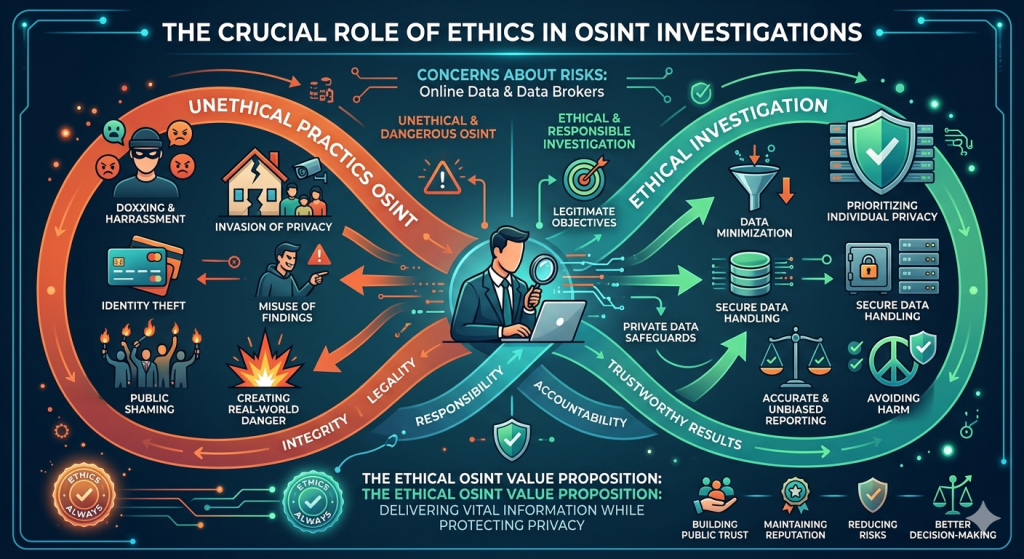
We have extensively studied the ethics of investigations, particularly related to insurance and #insurancedefense work and are often called on to present in the industry about these policies of ‘how far you can go before it’s too far’.
For Instance, these are some of the questions we tackle:
-If you have a data broker that allows you to follow someone in real time (allowing you to set agents on them with pinpoint accuracy) is that ethical?
-If your claimant/plaintiff is selling items online, is it ethical to order the items and then capture film of the person carrying your items to the mail house?
-Once you have retrieved bank and employment records for a claimant/plaintiff, what security measures are ethically required on those documents, and all other data, to ensure they are private forever?
-What level of detail into a person’s life is ethical beyond the matter referred to in the claim or case?
As data proliferates across the devices we use, and gets more granular every day, ethics are the last barrier allowing persons to have a private life. As we move forward conducting business, ethics are a critical component in vendor selection — for us as data purchasers and for our clients as vendor managers.
We hold the line together.
Home